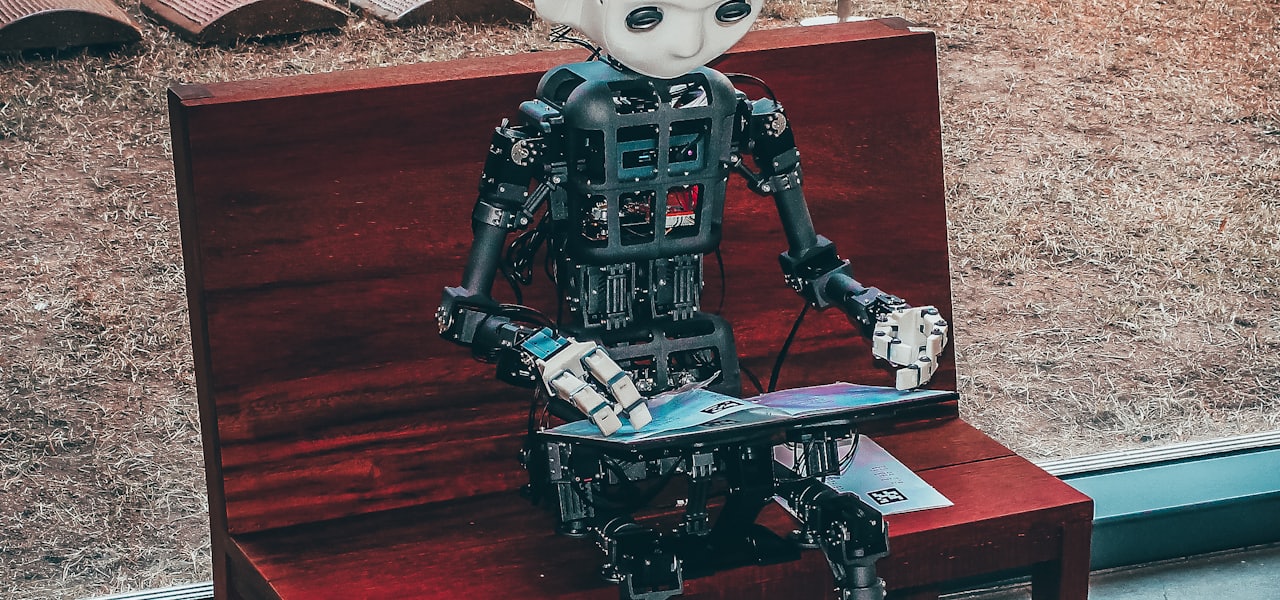
Project Debater is an IBM artificial intelligence project, designed to participate in a full live debate with expert human debaters. It follows on from the Watson project which played Jeopardy! == Development == Project Debater was developed at IBM's lab in Haifa, Israel. The project was proposed by Noam Slonim in 2011 as the IBM Research next Grand Challenge, following Deep Blue and the victory of Watson in Jeopardy! It was exposed for the first time in a closed media event at June 18, 2018, in San Francisco, under the leadership of Ranit Aharonov and Slonim, both from the IBM Research lab in Haifa, Israel. The AI technology debated two human debaters, Noa Ovadia, who was the 2016 Israeli debate champion and Dan Zafrir. The two debated on the topics "We should subsidize space exploration" and "Should we increase the use of telemedicine." A demonstration of Project Debater also aired on the Discovery Channel in June 2018 debating the question of whether sports gambling should be legalized. == Live Debate == On February 11, 2019, Project Debater was revealed to the world in a live debate in San Francisco. Nonpartisan media group Intelligence Squared U.S. Debates hosted the debate which was moderated by journalist John Donvan. The debate took place between Project Debater and Harish Natarajan, who holds the world record in number of debate competition victories. The motion was “We should subsidize preschools.” == That's Debatable Television Show == Project Debater was featured in a television series called “That’s Debatable” presented by Intelligence Squared U.S. Debates and Bloomberg Media. For each episode of “That’s Debatable,” Project Debater provided insight into three distinct debate topics on the redistribution of wealth, modern monetary theory, and a US-China space race. More than 5,000 arguments were submitted online from around the world across the three topics, which were then analyzed and distilled into key points that were highlighted on the television show and discussed by human debaters. == Artificial Intelligence Capabilities == To develop Project Debater, the IBM Research team had to endow the system with the following AI capabilities: Data-driven speech writing and delivery: Project Debater is the first demonstration of a computer that can digest massive corpora, and given a short description of a controversial topic, write a well-structured speech, and deliver it with clarity and purpose, while even incorporating humor where appropriate. Listening comprehension: the ability to identify the key concepts and claims hidden within long continuous spoken language. Four minutes of persuasive speech: the guarantee of producing four minutes of persuasive speech. Modeling human dilemmas: modeling the world of human controversy and dilemmas in a unique knowledge representation, enabling the system to suggest principled arguments as needed. An article on the project was published in Nature in March 2021.
Algorithmic probability
In algorithmic information theory, algorithmic probability, also known as Solomonoff probability, is a mathematical method of assigning a prior probability to a given observation. It was invented by Ray Solomonoff in the 1960s. It is used in inductive inference theory and analyses of algorithms. In his general theory of inductive inference, Solomonoff uses the method together with Bayes' rule to obtain probabilities of prediction for an algorithm's future outputs. In the mathematical formalism used, the observations have the form of finite binary strings viewed as outputs of Turing machines, and the universal prior is a probability distribution over the set of finite binary strings calculated from a probability distribution over programs (that is, inputs to a universal Turing machine). The prior is universal in the Turing-computability sense, i.e. no string has zero probability. It is not computable, but it can be approximated. Formally, the probability P {\displaystyle P} is not a probability and it is not computable. It is only "lower semi-computable" and a "semi-measure". By "semi-measure", it means that 0 ≤ ∑ x P ( x ) < 1 {\displaystyle 0\leq \sum _{x}P(x)<1} . That is, the "probability" does not actually sum up to one, unlike actual probabilities. This is because some inputs to the Turing machine causes it to never halt, which means the probability mass allocated to those inputs is lost. By "lower semi-computable", it means there is a Turing machine that, given an input string x {\displaystyle x} , can print out a sequence y 1 < y 2 < ⋯ {\displaystyle y_{1} The exploration–exploitation dilemma, also known as the explore–exploit tradeoff, is a fundamental concept in decision-making that arises in many domains. It is depicted as the balancing act between two opposing strategies. Exploitation involves choosing the best option based on current knowledge of the system (which may be incomplete or misleading), while exploration involves trying out new options that may lead to better outcomes in the future at the expense of an exploitation opportunity. Finding the optimal balance between these two strategies is a crucial challenge in many decision-making problems whose goal is to maximize long-term benefits. == Application in machine learning == In the context of machine learning, the exploration–exploitation tradeoff is fundamental in reinforcement learning (RL), a type of machine learning that involves training agents to make decisions based on feedback from the environment. Crucially, this feedback may be incomplete or delayed. The agent must decide whether to exploit the current best-known policy or explore new policies to improve its performance. === Multi-armed bandit methods === The multi-armed bandit (MAB) problem was a classic example of the tradeoff, and many methods were developed for it, such as epsilon-greedy, Thompson sampling, and the upper confidence bound (UCB). See the page on MAB for details. In more complex RL situations than the MAB problem, the agent can treat each choice as a MAB, where the payoff is the expected future reward. For example, if the agent performs an epsilon-greedy method, then the agent will often "pull the best lever" by picking the action that had the best predicted expected reward (exploit). However, it would pick a random action with probability epsilon (explore). Monte Carlo tree search, for example, uses a variant of the UCB method. === Exploration problems === There are some problems that make exploration difficult. Sparse reward. If rewards occur only once a long while, then the agent might not persist in exploring. Furthermore, if the space of actions is large, then the sparse reward would mean the agent would not be guided by the reward to find a good direction for deeper exploration. A standard example is Montezuma's Revenge. Deceptive reward. If some early actions give immediate small reward, but other actions give later large reward, then the agent might be lured away from exploring the other actions. Noisy TV problem. If certain observations are irreducibly noisy (such as a television showing random images), then the agent might be trapped exploring those observations (watching the television). === Exploration reward === This section based on. The exploration reward (also called exploration bonus) methods convert the exploration-exploitation dilemma into a balance of exploitations. That is, instead of trying to get the agent to balance exploration and exploitation, exploration is simply treated as another form of exploitation, and the agent simply attempts to maximize the sum of rewards from exploration and exploitation. The exploration reward can be treated as a form of intrinsic reward. We write these as r t i , r t e {\displaystyle r_{t}^{i},r_{t}^{e}} , meaning the intrinsic and extrinsic rewards at time step t {\displaystyle t} . However, exploration reward is different from exploitation in two regards: The reward of exploitation is not freely chosen, but given by the environment, but the reward of exploration may be picked freely. Indeed, there are many different ways to design r t i {\displaystyle r_{t}^{i}} described below. The reward of exploitation is usually stationary (i.e. the same action in the same state gives the same reward), but the reward of exploration is non-stationary (i.e. the same action in the same state should give less and less reward). Count-based exploration uses N n ( s ) {\displaystyle N_{n}(s)} , the number of visits to a state s {\displaystyle s} during the time-steps 1 : n {\displaystyle 1:n} , to calculate the exploration reward. This is only possible in small and discrete state space. Density-based exploration extends count-based exploration by using a density model ρ n ( s ) {\displaystyle \rho _{n}(s)} . The idea is that, if a state has been visited, then nearby states are also partly-visited. In maximum entropy exploration, the entropy of the agent's policy π {\displaystyle \pi } is included as a term in the intrinsic reward. That is, r t i = − ∑ a π ( a | s t ) ln π ( a | s t ) + ⋯ {\displaystyle r_{t}^{i}=-\sum _{a}\pi (a|s_{t})\ln \pi (a|s_{t})+\cdots } . === Prediction-based === This section based on. The forward dynamics model is a function for predicting the next state based on the current state and the current action: f : ( s t , a t ) ↦ s t + 1 {\displaystyle f:(s_{t},a_{t})\mapsto s_{t+1}} . The forward dynamics model is trained as the agent plays. The model becomes better at predicting state transition for state-action pairs that had been done many times. A forward dynamics model can define an exploration reward by r t i = ‖ f ( s t , a t ) − s t + 1 ‖ 2 2 {\displaystyle r_{t}^{i}=\|f(s_{t},a_{t})-s_{t+1}\|_{2}^{2}} . That is, the reward is the squared-error of the prediction compared to reality. This rewards the agent to perform state-action pairs that had not been done many times. This is however susceptible to the noisy TV problem. Dynamics model can be run in latent space. That is, r t i = ‖ f ( s t , a t ) − ϕ ( s t + 1 ) ‖ 2 2 {\displaystyle r_{t}^{i}=\|f(s_{t},a_{t})-\phi (s_{t+1})\|_{2}^{2}} for some featurizer ϕ {\displaystyle \phi } . The featurizer can be the identity function (i.e. ϕ ( x ) = x {\displaystyle \phi (x)=x} ), randomly generated, the encoder-half of a variational autoencoder, etc. A good featurizer improves forward dynamics exploration. The Intrinsic Curiosity Module (ICM) method trains simultaneously a forward dynamics model and a featurizer. The featurizer is trained by an inverse dynamics model, which is a function for predicting the current action based on the features of the current and the next state: g : ( ϕ ( s t ) , ϕ ( s t + 1 ) ) ↦ a t {\displaystyle g:(\phi (s_{t}),\phi (s_{t+1}))\mapsto a_{t}} . By optimizing the inverse dynamics, both the inverse dynamics model and the featurizer are improved. Then, the improved featurizer improves the forward dynamics model, which improves the exploration of the agent. Random Network Distillation (RND) method attempts to solve this problem by teacher–student distillation. Instead of a forward dynamics model, it has two models f , f ′ {\displaystyle f,f'} . The f ′ {\displaystyle f'} teacher model is fixed, and the f {\displaystyle f} student model is trained to minimize ‖ f ( s ) − f ′ ( s ) ‖ 2 2 {\displaystyle \|f(s)-f'(s)\|_{2}^{2}} on states s {\displaystyle s} . As a state is visited more and more, the student network becomes better at predicting the teacher. Meanwhile, the prediction error is also an exploration reward for the agent, and so the agent learns to perform actions that result in higher prediction error. Thus, we have a student network attempting to minimize the prediction error, while the agent attempting to maximize it, resulting in exploration. The states are normalized by subtracting a running average and dividing a running variance, which is necessary since the teacher model is frozen. The rewards are normalized by dividing with a running variance. Exploration by disagreement trains an ensemble of forward dynamics models, each on a random subset of all ( s t , a t , s t + 1 ) {\displaystyle (s_{t},a_{t},s_{t+1})} tuples. The exploration reward is the variance of the models' predictions. === Noise === For neural network–based agents, the NoisyNet method changes some of its neural network modules by noisy versions. That is, some network parameters are random variables from a probability distribution. The parameters of the distribution are themselves learnable. For example, in a linear layer y = W x + b {\displaystyle y=Wx+b} , both W , b {\displaystyle W,b} are sampled from Gaussian distributions N ( μ W , Σ W ) , N ( μ b , Σ b ) {\displaystyle {\mathcal {N}}(\mu _{W},\Sigma _{W}),{\mathcal {N}}(\mu _{b},\Sigma _{b})} at every step, and the parameters μ W , Σ W , μ b , Σ b {\displaystyle \mu _{W},\Sigma _{W},\mu _{b},\Sigma _{b}} are learned via the reparameterization trick. In artificial neural networks, a hidden layer is a layer of artificial neurons that is neither an input layer nor an output layer. The simplest examples appear in multilayer perceptrons (MLP), as illustrated in the diagram. An MLP without any hidden layer is essentially just a linear model. With hidden layers and activation functions, however, nonlinearity is introduced into the model. In typical machine learning practice, the weights and biases are initialized, then iteratively updated during training via backpropagation. GOLOG is a high-level logic programming language for the specification and execution of complex actions in dynamical domains. It is based on the situation calculus. It is a first-order logical language for reasoning about action and change. GOLOG was developed at the University of Toronto. == History == The concept of situation calculus on which the GOLOG programming language is based was first proposed by John McCarthy in 1963. == Description == A GOLOG interpreter automatically maintains a direct characterization of the dynamic world being modeled, on the basis of user supplied axioms about preconditions, effects of actions and the initial state of the world. This allows the application to reason about the condition of the world and consider the impacts of different potential actions before focusing on a specific action. Golog is a logic programming language and is very different from conventional programming languages. A procedural programming language like C defines the execution of statements in advance. The programmer creates a subroutine which consists of statements, and the computer executes each statement in a linear order. In contrast, fifth-generation programming languages like Golog work with an abstract model with which the interpreter can generate the sequence of actions. The source code defines the problem and it is up to the solver to find the next action. This approach can facilitate the management of complex problems from the domain of robotics. A Golog program defines the state space in which the agent is allowed to operate. A path in the symbolic domain is found with state space search. To speed up the process, Golog programs are realized as hierarchical task networks. Apart from the original Golog language, there are some extensions available. The ConGolog language provides concurrency and interrupts. Other dialects like IndiGolog and Readylog were created for real time applications in which sensor readings are updated on the fly. == Uses == Golog has been used to model the behavior of autonomous agents. In addition to a logic-based action formalism for describing the environment and the effects of basic actions, they enable the construction of complex actions using typical programming language constructs. It is also used for applications in high level control of robots and industrial processes, virtual agents, discrete event simulation etc. It can be also used to develop Belief Desire Intention-style agent systems. == Planning and scripting == In contrast to the Planning Domain Definition Language, Golog supports planning and scripting as well. Planning means that a goal state in the world model is defined, and the solver brings a logical system into this state. Behavior scripting implements reactive procedures, which are running as a computer program. For example, suppose the idea is to authoring a story. The user defines what should be true at the end of the plot. A solver gets started and applies possible actions to the current situation until the goal state is reached. The specification of a goal state and the possible actions are realized in the logical world model. In contrast, a hardwired reactive behavior doesn't need a solver but the action sequence is provided in a scripting language. The Golog interpreter, which is written in Prolog, executes the script and this will bring the story into the goal state. Desktop video refers to a phenomenon lasting from the mid-1980s to the early 1990s when the graphics capabilities of personal computers such as the Amiga, Macintosh II, and specially-upgraded IBM PC compatibles had advanced to the point where individuals and local broadcasters could use them for analog non-linear editing and vision mixing in video production. Despite the use of computers, desktop video should not be confused with digital video since the video data remained analog, and it uses items like a VCR and a camcorder to record the video. Full-screen, full-motion video's vast storage requirements meant that the promise of digital encoding would not be realized on desktop computers for at least another decade. == Description == There were multiple models of genlock cards available to synchronize the content; the Newtek Video Toaster was commonly used in Amiga in countries that used NTSC (PAL-M in Brazil), while PCs had Truevision and Matrox Illuminator cards and Mac systems had the SuperMac Video Spigot and Radius VideoVision cards. Apple later introduced the Macintosh Quadra 840AV and Centris 660AV systems to specifically address this market. Desktop video was a parallel development to desktop publishing and enabled many small production houses and local TV stations to produce their own original content for the first time. Along with the advent of public-access cable channels, desktop video meant that television advertising became affordable for local businesses such as retailers, restaurants, real estate agents, contractors and auto dealers. As with the phrase desktop publishing, use of the term died out as the technologies to which it referred become the norm for any kind of video production. Universal psychometrics encompasses psychometrics instruments that could measure the psychological properties of any intelligent agent. Up until the early 21st century, psychometrics relied heavily on psychological tests that require the subject to cooperate and answer questions, the most famous example being an intelligence test. Such methods are only applicable to the measurement of human psychological properties. As a result, some researchers have proposed the idea of universal psychometrics - they suggest developing testing methods that allow for the measurement of non-human entities' psychological properties. For example, it has been suggested that the Turing test is a form of universal psychometrics. This test involves having testers (without any foreknowledge) attempt to distinguish a human from a machine by interacting with both (while not being to see either individuals). It is supposed that if the machine is equally intelligent to a human, the testers will not be able to distinguish between the two, i.e., their guesses will not be better than chance. Thus, Turing test could measure the intelligence (a psychological variable) of an AI. Other instruments proposed for universal psychometrics include reinforcement learning and measuring the ability to predict complexity.Exploration–exploitation dilemma
Hidden layer
GOLOG
Desktop video
Universal psychometrics