Sketchpad (a.k.a. Robot Draftsman) is a computer program written by Ivan Sutherland in 1963 in the course of his PhD thesis, for which he received the Turing Award in 1988, and the Kyoto Prize in 2012. It pioneered human–computer interaction (HCI), and is considered the ancestor of modern computer-aided design (CAD) programs and as a major breakthrough in the development of computer graphics in general. For example, Sketchpad inspired the graphical user interface (GUI) and object-oriented programming. Using the program, Sutherland showed that computer graphics could be used for both artistic and technical purposes and for demonstrating a novel method of human–computer interaction. == History == See History of the graphical user interface for a more detailed discussion of GUI development. == Software == Sketchpad was the earliest program ever to use a complete graphical user interface. The clever way the program organizes its geometric data pioneered the use of master (objects) and occurrences (instances) in computing and pointed forward to object-oriented programming. The main idea was to have master drawings which can be instantiated into many duplicates. When a master drawing is changed, then all instances change also. This was the first known form of an entity component system: for example instead of encapsulating points inside of a line object, the points are stored in a ring buffer as described in pages 48 to 52 of the paper, and the line only points to them. This allowed moving one point to alter all the shapes that use it in a single operation. The structures in Sketchpad were also able to store pointers to functions, to achieve a different behavior depending on the kind of object. In figure 3.8 of the paper, the "instances generic block" stores several "subroutine entries" which are pointers to functions: "display", "howbig" etc. This was an early form of virtual functions. Geometric constraints was another major invention in Sketchpad, letting a user easily constrain geometric properties in the drawing: for instance, the length of a line or the angle between two lines could be fixed. As a trade magazine said, clearly Sutherland "broke new ground in 3D computer modeling and visual simulation, the basis for computer graphics and CAD/CAM". Very few programs can be called precedents for his achievements. Patrick J. Hanratty is sometimes called the "father of CAD/CAM" and wrote PRONTO, a numerical control language at General Electric in 1957, and wrote CAD software while working for General Motors beginning in 1961. Sutherland wrote in his thesis that Bolt, Beranek and Newman had a "similar program" and T-Square was developed by Peter Samson and one or more fellow MIT students in 1962, both for the PDP-1. The Computer History Museum holds program listings for Sketchpad. == Hardware == Sketchpad ran on the MIT Lincoln Laboratory TX-2 (1958) computer at the Massachusetts Institute of Technology (MIT), which had 64k of 36-bit words. The user drew on the computer monitor screen with the recently invented light pen, which relayed information on its position by computing at what time the light from the scanning cathode-ray tube screen is detected. To configure the initial position of the light pen, the word INK was displayed on the screen, which, upon tapping, initialised the program with a white cross to continue keeping track of the pen's movement relative to its prior position. Of the 36 bits available to store each display spot in the display file, 20 gave the coordinates of that spot for the display system and the remaining 16 gave the address of the n-component element responsible for adding that spot to display. The TX-2 was an experimental machine and the hardware changed often (on Wednesdays, according to Sutherland). By 1975, the light pen and the cathode-ray tube with which it had been used had been removed. == Publications == The Sketchpad program was part and parcel of Sutherland's Ph.D. thesis at MIT and peripherally related to the Computer-Aided Design project at that time. Sketchpad: A Man-Machine Graphical Communication System.
Winner-take-all in action selection
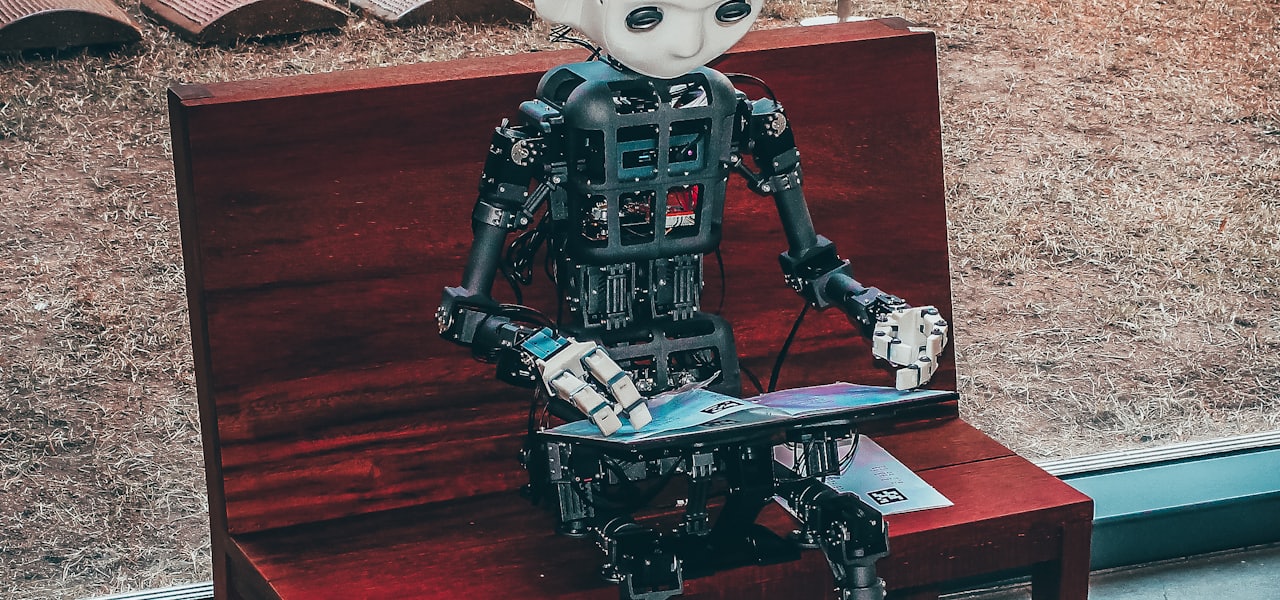
Winner-take-all is a computer science concept that has been widely applied in behavior-based robotics as a method of action selection for intelligent agents. Winner-take-all systems work by connecting modules (task-designated areas) in such a way that when one action is performed it stops all other actions from being performed, so only one action is occurring at a time. The name comes from the idea that the "winner" action takes all of the motor system's power. == History == In the 1980s and 1990s, many roboticists and cognitive scientists were attempting to find speedier and more efficient alternatives to the traditional world modeling method of action selection. In 1982, Jerome A. Feldman and D.H. Ballard published the "Connectionist Models and Their Properties", referencing and explaining winner-take-all as a method of action selection. Feldman's architecture functioned on the simple rule that in a network of interconnected action modules, each module will set its own output to zero if it reads a higher input than its own in any other module. In 1986, Rodney Brooks introduced behavior-based artificial intelligence. Winner-take-all architectures for action selection soon became a common feature of behavior-based robots, because selection occurred at the level of the action modules (bottom-up) rather than at a separate cognitive level (top-down), producing a tight coupling of stimulus and reaction. == Types of winner-take-all architectures == === Hierarchy === In the hierarchical architecture, actions or behaviors are programmed in a high-to-low priority list, with inhibitory connections between all the action modules. The agent performs low-priority behaviors until a higher-priority behavior is stimulated, at which point the higher behavior inhibits all other behaviors and takes over the motor system completely. Prioritized behaviors are usually key to the immediate survival of the agent, while behaviors of lower priority are less time-sensitive. For example, "run away from predator" would be ranked above "sleep." While this architecture allows for clear programming of goals, many roboticists have moved away from the hierarchy because of its inflexibility. === Heterarchy and fully distributed === In the heterarchy and fully distributed architecture, each behavior has a set of pre-conditions to be met before it can be performed, and a set of post-conditions that will be true after the action has been performed. These pre- and post-conditions determine the order in which behaviors must be performed and are used to causally connect action modules. This enables each module to receive input from other modules as well as from the sensors, so modules can recruit each other. For example, if the agent's goal were to reduce thirst, the behavior "drink" would require the pre-condition of having water available, so the module would activate the module in charge of "find water". The activations organize the behaviors into a sequence, even though only one action is performed at a time. The distribution of larger behaviors across modules makes this system flexible and robust to noise. Some critics of this model hold that any existing set of division rules for the predecessor and conflictor connections between modules produce sub-par action selection. In addition, the feedback loop used in the model can in some circumstances lead to improper action selection. === Arbiter and centrally coordinated === In the arbiter and centrally coordinated architecture, the action modules are not connected to each other but to a central arbiter. When behaviors are triggered, they begin "voting" by sending signals to the arbiter, and the behavior with the highest number of votes is selected. In these systems, bias is created through the "voting weight", or how often a module is allowed to vote. Some arbiter systems take a different spin on this type of winner-take-all by using a "compromise" feature in the arbiter. Each module is able to vote for or against each smaller action in a set of actions, and the arbiter selects the action with the most votes, meaning that it benefits the most behavior modules. This can be seen as violating the general rule against creating representations of the world in behavior-based AI, established by Brooks. By performing command fusion, the system is creating a larger composite pool of knowledge than is obtained from the sensors alone, forming a composite inner representation of the environment. Defenders of these systems argue that forbidding world-modeling puts unnecessary constraints on behavior-based robotics, and that agents benefits from forming representations and can still remain reactive.
Deep tomographic reconstruction
Deep Tomographic Reconstruction is a set of methods for using deep learning methods to perform tomographic reconstruction of medical and industrial images. It uses artificial intelligence and machine learning, especially deep artificial neural networks or deep learning, to overcome challenges such as measurement noise, data sparsity, image artifacts, and computational inefficiency. This approach has been applied across various imaging modalities, including CT, MRI, PET, SPECT, ultrasound, and optical imaging == Historical background == Traditional tomographic reconstruction relies on analytic methods such as filtered back-projection, or iterative methods which incrementally compute inverse transformations from measurement data (e.g., Radon or Fourier transform data). However, these approaches are not sufficient for certain imaging techniques such as low-dose CT and fast MRI, or scenarios involving metal artifacts and patient motion. == Use in imaging modalities == === Computed tomography (CT) === In CT, deep learning models can be particularly effective in reducing radiation exposure while maintaining image quality. Deep neural networks can also be able to reconstruct images of fair quality from sparsely sampled data without sacrificing diagnostic performance. Deep learning-based generative AI models can reduce CT metal artifacts. === Magnetic resonance imaging (MRI) === In magnetic resonance imaging (MRI), deep learning can lead to reduced MRI motion artifacts, and increased acquisition speed, referred to as fast MRI. Despite suffering from disadvantages such as lower signal-to-noise ratio (SNR), deep learning can enhance image quality in low field MRI, making these systems clinically viable. === Positron emission tomography (PET) and single-photon emission CT (SPECT) === For PET imaging, deep learning models can provide substantial improvements in low-dose imaging and motion artifact correction. Also, deep learning can help SPECT for generation of attenuation background. A notable technique for PET denoising involves integrating MR data through multimodal networks, which use anatomical information from MRI to enhance PET image quality. === Ultrasound imaging === Deep learning can enhance ultrasound imaging by reducing speckle noise and motion blur. For ultrasound beamforming, deep neural networks can allow superior image quality with limited data at high speed. === Optical imaging and microscopy === Diffuse optical tomography, optical coherence tomography and microscopy can be improved by deep neural networks beyond traditional methods. Furthermore, deep learning can also enhance Photoacoustic imaging (see Deep learning in photoacoustic imaging), addressing challenges like high noise, low contrast, and limited resolution. Deep learning has also been applied to label-free live-cell imaging, where convolutional neural networks predict fluorescence labels from transmitted light images, a technique known as in silico labeling. This method can enable high-throughput, non-invasive cell analysis and phenotyping without the need for traditional fluorescent dyes.
NASA AI Assisted-Air Quality Monitoring Project
The NASA Expert-System Ion Trap Mass Spectrometer (ES-ITMS) Project was a public-private partnership to develop an artificial intelligence assisted, air quality monitoring system and was qualified for use on the Space Shuttle. The partnership was also the first cost and intellectual property shared public-partnership implemented by NASA, which used the commercial Research and Development Limited Partnership (RDLP) model that had been adopted by the Reagan Administration for Department of Defense semiconductor development, and recommended for use by NASA for space commercialization. The project partners included NASA, the University of Florida and Finnigan MAT Corporation, was organized and administered by the NASA Joint Enterprise Institute (subsequently NASA Joint Sponsored Program) and ran from 1988 through 1990. The partnership concluded final testing in 1991, generating four patents, expert system software and application protocol reports. The system was space qualified for use on the Shuttle and elements of the ES-ITMS system were integrated into the product Improvements for Finnigan MAT corporation. The success of the partnership lead NASA to create a pilot program to develop partnership business models as an ongoing management practice. == Purpose and objectives == The need to monitor air quality in confined spaces represented an increasing challenge for NASA's planned space missions and private sector facility managers facing the increased scrutiny of possible air contaminants. Up to the early 1980's, air quality monitors generally required large spaces and human technicians to interpret readings. This created a need for miniaturized air quality monitors that could generate reliable and accurate analytic results without on-site technician presence. NASA initiated projects to develop..."mobile and/or portable mass spectrometers" that evaluated the "tradeoff between instrumentation capabilities and space, weight and power considerations." NASA selected a "commercial ITMS instrument capable of generating electron ionization, chemical ionization and mass spectrometry data", to develop a linked expert system to accomplish analysis without human intervention. The commercial instrumentation was from Finnigan MAT corporation while the scientific expertise to support expert system development was available at the University of Florida. The project managers at NASA Ames created a single, integrated project using the RDLP model with objectives to: Develop AI/expert system software for instrument control (NASA's role) Expand sensitivity, selectivity and speed of the spectrometer (Univ Florida role) Expand the spectrometer analytic capability and automate the screening (Finnigan role) == Membership == The partnership included seven specialists from five member organizations: Federal Government National Aeronautics and Space Administration (NASA) NASA Ames Research Center (ARC) NASA Kennedy Space Center (KSC) Commercial Finnigan MAT Corporation (Thermo-Fisher Scientific) TGS Technology, Inc. Research Management University of Florida == Organization, management and administration == The technical project was organized into two development teams, one located in at the NASA Ames Research Center covering expert systems and analytic capabilities and one in Florida covering improved sensitivity and testing. The partnership management and administration was provided by a non-profit, partnership support organization: the Joint Enterprise Institute operating through San Francisco State University Foundation (SFSUF) with a NASA employee liaison, Syed Shariq. == Public-private partnership == The partnership structure was as a prototype test of a pilot NASA program to develop public-private partnership business models. The pilot program was known as the NASA Joint Sponsored Research Program (JSRP), which operated as the NASA Joint Enterprise Institute between 1988 and 1991. The partnership was the first public-private, research and development partnership implemented by NASA in response to national policy shifts to increase technology transfer and space commercialization. The partnership structure included a two year technology development and testing plan that cost $610,000, of which NASA funded $310,000, Finnigan $175,000 and the University of Florida $95,000. == Results and commercialization == The project generated patents (4), software (2) and application protocol reports (8). NASA gained use of the patents and jointly development software while Finnigan received commercial utilization rights. The results were commercialized within eighteen months of project completion. == Recognition == NASA recognized the project as a space qualified instrument. Its achievements were reported to the NASA Administrator, directly leading to establishment of the agency-wide Joint Sponsored Research Program.
AZFinText
Arizona Financial Text System (AZFinText) is a textual-based quantitative financial prediction system written by Robert P. Schumaker of University of Texas at Tyler and Hsinchun Chen of the University of Arizona. == System == This system differs from other systems in that it uses financial text as one of its key means of predicting stock price movement. This reduces the information lag-time problem evident in many similar systems where new information must be transcribed (e.g., such as losing a costly court battle or having a product recall), before the quant can react appropriately. AZFinText overcomes these limitations by utilizing the terms used in financial news articles to predict future stock prices twenty minutes after the news article has been released. It is believed that certain article terms can move stocks more than others. Terms such as factory exploded or workers strike will have a depressing effect on stock prices whereas terms such as earnings rose will tend to increase stock prices. The AZFinText system analyzes financial news to identify the patterns in how investors react to such specific information. It uses methods like sentiment analysis and term weighting to examine the text of news articles. This system is designed to find price differences that occur when the market responds to news stories. This approach provides an alternative and easier method for predicting stock market movements. == Overview of research == The foundation of AZFinText can be found in the ACM TOIS article. Within this paper, the authors tested several different prediction models and linguistic textual representations. From this work, it was found that using the article terms and the price of the stock at the time the article was released was the most effective model and using proper nouns was the most effective textual representation technique. Combining the two, AZFinText netted a 2.84% trading return over the five-week study period. AZFinText was then extended to study what combination of peer organizations help to best train the system. Using the premise that IBM has more in common with Microsoft than GM, AZFinText studied the effect of varying peer-based training sets. To do this, AZFinText trained on the various levels of GICS and evaluated the results. It was found that sector-based training was most effective, netting an 8.50% trading return, outperforming Jim Cramer, Jim Jubak and DayTraders.com during the study period. AZFinText was also compared against the top 10 quantitative systems and outperformed 6 of them. A third study investigated the role of portfolio building in a textual financial prediction system. From this study, Momentum and Contrarian stock portfolios were created and tested. Using the premise that past winning stocks will continue to win and past losing stocks will continue to lose, AZFinText netted a 20.79% return during the study period. It was also noted that traders were generally overreacting to news events, creating the opportunity of abnormal returns. A fourth study looked into using author sentiment as an added predictive variable. Using the premise that an author can unwittingly influence market trades simply by the terms they use, AZFinText was tested using tone and polarity features. It was found that Contrarian activity was occurring within the market, where articles of a positive tone would decrease in price and articles of a negative tone would increase in price. A further study investigated what article verbs have the most influence on stock price movement. From this work, it was found that planted, announcing, front, smaller and crude had the highest positive impact on stock price. == Notable publicity == AZFinText has been the topic of discussion by numerous media outlets. Some of the more notable ones include The Wall Street Journal, MIT's Technology Review, Dow Jones Newswire, WBIR in Knoxville, TN, Slashdot and other media outlets.
Cloud-based integration
Cloud-based integration is a form of systems integration business delivered as a cloud computing service that addresses data, process, service-oriented architecture (SOA) and application integration. == Description == Integration platform as a service (iPaaS) is a suite of cloud services enabling customers to develop, execute and govern integration flows between disparate applications. Under the cloud-based iPaaS integration model, customers drive the development and deployment of integrations without installing or managing any hardware or middleware. The iPaaS model allows businesses to achieve integration without big investment into skills or licensed middleware software. iPaaS used to be regarded primarily as an integration tool for cloud-based software applications, used mainly by small to mid-sized business. Over time, a hybrid type of iPaaS—hybrid-IT iPaaS—that connects cloud to on-premises, is becoming increasingly popular. Additionally, large enterprises are exploring new ways of integrating iPaaS into their existing IT infrastructures. Cloud integration was created to break down the data silos, improve connectivity and optimize the business process. Cloud integration has increased in popularity as the usage of Software as a Service solutions has grown. Prior to the emergence of cloud computing in the early 2000s, integration could be categorized as either internal or business to business (B2B). Internal integration requirements were serviced through an on-premises middleware platform and typically utilized a service bus to manage exchange of data between systems. B2B integration was serviced through EDI gateways or value-added network (VAN). The advent of SaaS applications created a new kind of demand which was met through cloud-based integration. Since their emergence, many such services have also developed the capability to integrate legacy or on-premises applications, as well as function as EDI gateways. The following essential features were proposed by one marketing company: Deployed on a multi-tenant, elastic cloud infrastructure Subscription model pricing (operating expense, not capital expenditure) No software development (required connectors should already be available) Users do not perform deployment or manage the platform itself Presence of integration management and monitoring features The emergence of this sector led to new cloud-based business process management tools that do not need to build integration layers - since those are now a separate service. Drivers of growth include the need to integrate mobile app capabilities with proliferating API publishing resources and the growth in demand for the Internet of things functionalities as more 'things' connect to the Internet.
Algorithmic inference
Algorithmic inference gathers new developments in the statistical inference methods made feasible by the powerful computing devices widely available to any data analyst. Cornerstones in this field are computational learning theory, granular computing, bioinformatics, and, long ago, structural probability (Fraser 1966). The main focus is on the algorithms which compute statistics rooting the study of a random phenomenon, along with the amount of data they must feed on to produce reliable results. This shifts the interest of mathematicians from the study of the distribution laws to the functional properties of the statistics, and the interest of computer scientists from the algorithms for processing data to the information they process. == The Fisher parametric inference problem == Concerning the identification of the parameters of a distribution law, the mature reader may recall lengthy disputes in the mid 20th century about the interpretation of their variability in terms of fiducial distribution (Fisher 1956), structural probabilities (Fraser 1966), priors/posteriors (Ramsey 1925), and so on. From an epistemology viewpoint, this entailed a companion dispute as to the nature of probability: is it a physical feature of phenomena to be described through random variables or a way of synthesizing data about a phenomenon? Opting for the latter, Fisher defines a fiducial distribution law of parameters of a given random variable that he deduces from a sample of its specifications. With this law he computes, for instance "the probability that μ (mean of a Gaussian variable – omeur note) is less than any assigned value, or the probability that it lies between any assigned values, or, in short, its probability distribution, in the light of the sample observed". == The classic solution == Fisher fought hard to defend the difference and superiority of his notion of parameter distribution in comparison to analogous notions, such as Bayes' posterior distribution, Fraser's constructive probability and Neyman's confidence intervals. For half a century, Neyman's confidence intervals won out for all practical purposes, crediting the phenomenological nature of probability. With this perspective, when you deal with a Gaussian variable, its mean μ is fixed by the physical features of the phenomenon you are observing, where the observations are random operators, hence the observed values are specifications of a random sample. Because of their randomness, you may compute from the sample specific intervals containing the fixed μ with a given probability that you denote confidence. === Example === Let X be a Gaussian variable with parameters μ {\displaystyle \mu } and σ 2 {\displaystyle \sigma ^{2}} and { X 1 , … , X m } {\displaystyle \{X_{1},\ldots ,X_{m}\}} a sample drawn from it. Working with statistics S μ = ∑ i = 1 m X i {\displaystyle S_{\mu }=\sum _{i=1}^{m}X_{i}} and S σ 2 = ∑ i = 1 m ( X i − X ¯ ) 2 , where X ¯ = S μ m {\displaystyle S_{\sigma ^{2}}=\sum _{i=1}^{m}(X_{i}-{\overline {X}})^{2},{\text{ where }}{\overline {X}}={\frac {S_{\mu }}{m}}} is the sample mean, we recognize that T = S μ − m μ S σ 2 m − 1 m = X ¯ − μ S σ 2 / ( m ( m − 1 ) ) {\displaystyle T={\frac {S_{\mu }-m\mu }{\sqrt {S_{\sigma ^{2}}}}}{\sqrt {\frac {m-1}{m}}}={\frac {{\overline {X}}-\mu }{\sqrt {S_{\sigma ^{2}}/(m(m-1))}}}} follows a Student's t distribution (Wilks 1962) with parameter (degrees of freedom) m − 1, so that f T ( t ) = Γ ( m / 2 ) Γ ( ( m − 1 ) / 2 ) 1 π ( m − 1 ) ( 1 + t 2 m − 1 ) m / 2 . {\displaystyle f_{T}(t)={\frac {\Gamma (m/2)}{\Gamma ((m-1)/2)}}{\frac {1}{\sqrt {\pi (m-1)}}}\left(1+{\frac {t^{2}}{m-1}}\right)^{m/2}.} Gauging T between two quantiles and inverting its expression as a function of μ {\displaystyle \mu } you obtain confidence intervals for μ {\displaystyle \mu } . With the sample specification: x = { 7.14 , 6.3 , 3.9 , 6.46 , 0.2 , 2.94 , 4.14 , 4.69 , 6.02 , 1.58 } {\displaystyle \mathbf {x} =\{7.14,6.3,3.9,6.46,0.2,2.94,4.14,4.69,6.02,1.58\}} having size m = 10, you compute the statistics s μ = 43.37 {\displaystyle s_{\mu }=43.37} and s σ 2 = 46.07 {\displaystyle s_{\sigma ^{2}}=46.07} , and obtain a 0.90 confidence interval for μ {\displaystyle \mu } with extremes (3.03, 5.65). == Inferring functions with the help of a computer == From a modeling perspective the entire dispute looks like a chicken-egg dilemma: either fixed data by first and probability distribution of their properties as a consequence, or fixed properties by first and probability distribution of the observed data as a corollary. The classic solution has one benefit and one drawback. The former was appreciated particularly back when people still did computations with sheet and pencil. Per se, the task of computing a Neyman confidence interval for the fixed parameter θ is hard: you do not know θ, but you look for disposing around it an interval with a possibly very low probability of failing. The analytical solution is allowed for a very limited number of theoretical cases. Vice versa a large variety of instances may be quickly solved in an approximate way via the central limit theorem in terms of confidence interval around a Gaussian distribution – that's the benefit. The drawback is that the central limit theorem is applicable when the sample size is sufficiently large. Therefore, it is less and less applicable with the sample involved in modern inference instances. The fault is not in the sample size on its own part. Rather, this size is not sufficiently large because of the complexity of the inference problem. With the availability of large computing facilities, scientists refocused from isolated parameters inference to complex functions inference, i.e. re sets of highly nested parameters identifying functions. In these cases we speak about learning of functions (in terms for instance of regression, neuro-fuzzy system or computational learning) on the basis of highly informative samples. A first effect of having a complex structure linking data is the reduction of the number of sample degrees of freedom, i.e. the burning of a part of sample points, so that the effective sample size to be considered in the central limit theorem is too small. Focusing on the sample size ensuring a limited learning error with a given confidence level, the consequence is that the lower bound on this size grows with complexity indices such as VC dimension or detail of a class to which the function we want to learn belongs. === Example === A sample of 1,000 independent bits is enough to ensure an absolute error of at most 0.081 on the estimation of the parameter p of the underlying Bernoulli variable with a confidence of at least 0.99. The same size cannot guarantee a threshold less than 0.088 with the same confidence 0.99 when the error is identified with the probability that a 20-year-old man living in New York does not fit the ranges of height, weight and waistline observed on 1,000 Big Apple inhabitants. The accuracy shortage occurs because both the VC dimension and the detail of the class of parallelepipeds, among which the one observed from the 1,000 inhabitants' ranges falls, are equal to 6. == The general inversion problem solving the Fisher question == With insufficiently large samples, the approach: fixed sample – random properties suggests inference procedures in three steps: === Definition === For a random variable and a sample drawn from it a compatible distribution is a distribution having the same sampling mechanism M X = ( Z , g θ ) {\displaystyle {\mathcal {M}}_{X}=(Z,g_{\boldsymbol {\theta }})} of X with a value θ {\displaystyle {\boldsymbol {\theta }}} of the random parameter Θ {\displaystyle \mathbf {\Theta } } derived from a master equation rooted on a well-behaved statistic s. === Example === You may find the distribution law of the Pareto parameters A and K as an implementation example of the population bootstrap method as in the figure on the left. Implementing the twisting argument method, you get the distribution law F M ( μ ) {\displaystyle F_{M}(\mu )} of the mean M of a Gaussian variable X on the basis of the statistic s M = ∑ i = 1 m x i {\textstyle s_{M}=\sum _{i=1}^{m}x_{i}} when Σ 2 {\displaystyle \Sigma ^{2}} is known to be equal to σ 2 {\displaystyle \sigma ^{2}} (Apolloni, Malchiodi & Gaito 2006). Its expression is: F M ( μ ) = Φ ( m μ − s M σ m ) , {\displaystyle F_{M}(\mu )=\Phi {\left({\frac {m\mu -s_{M}}{\sigma {\sqrt {m}}}}\right)},} shown in the figure on the right, where Φ {\displaystyle \Phi } is the cumulative distribution function of a standard normal distribution. Computing a confidence interval for M given its distribution function is straightforward: we need only find two quantiles (for instance δ / 2 {\displaystyle \delta /2} and 1 − δ / 2 {\displaystyle 1-\delta /2} quantiles in case we are interested in a confidence interval of level δ symmetric in the tail's probabilities) as indicated on the left in the diagram showing the behavior of